Blog
Nobody Needs To Know How Old You Are

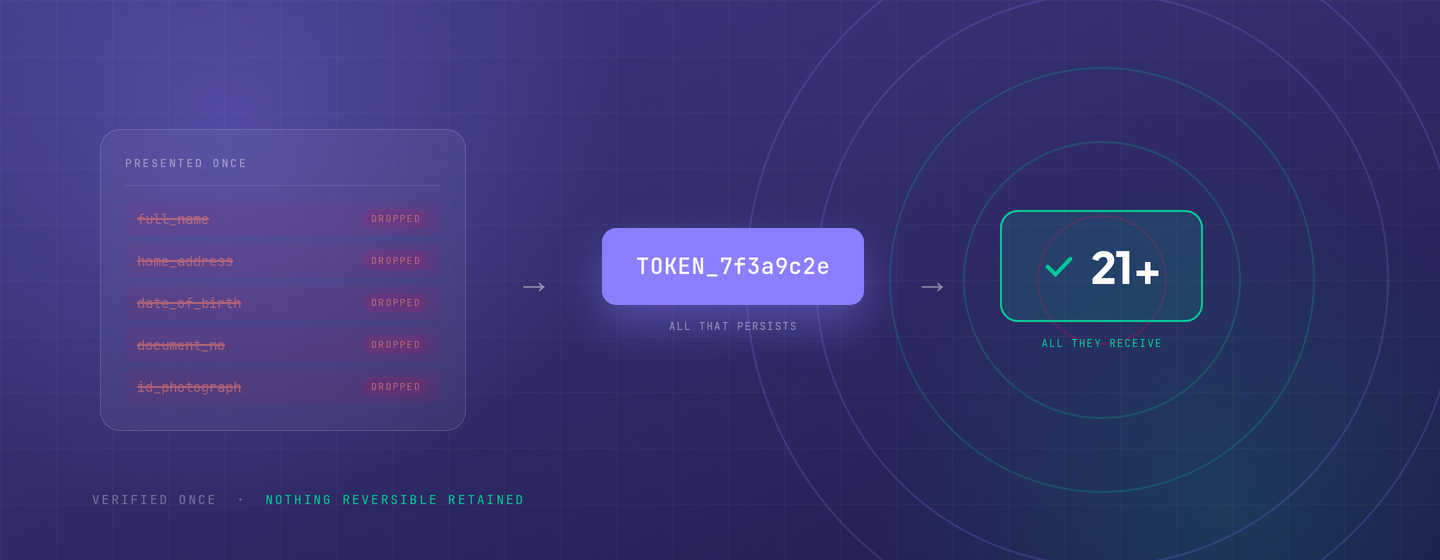
Recently, the story of Discord's age-verification struggles made headlines again — and the detail that stopped us wasn't the regulatory pressure, or the delayed rollout, or even the pivot to Google Wallet. It was the number: 70,000. That's how many ID photos leaked from a prior verification vendor. Seventy thousand people who handed over their faces and government documents, trusting they were protected.
They weren't. Not because the technology failed in some exotic way. Because photographs existed on a server somewhere — and servers get breached.
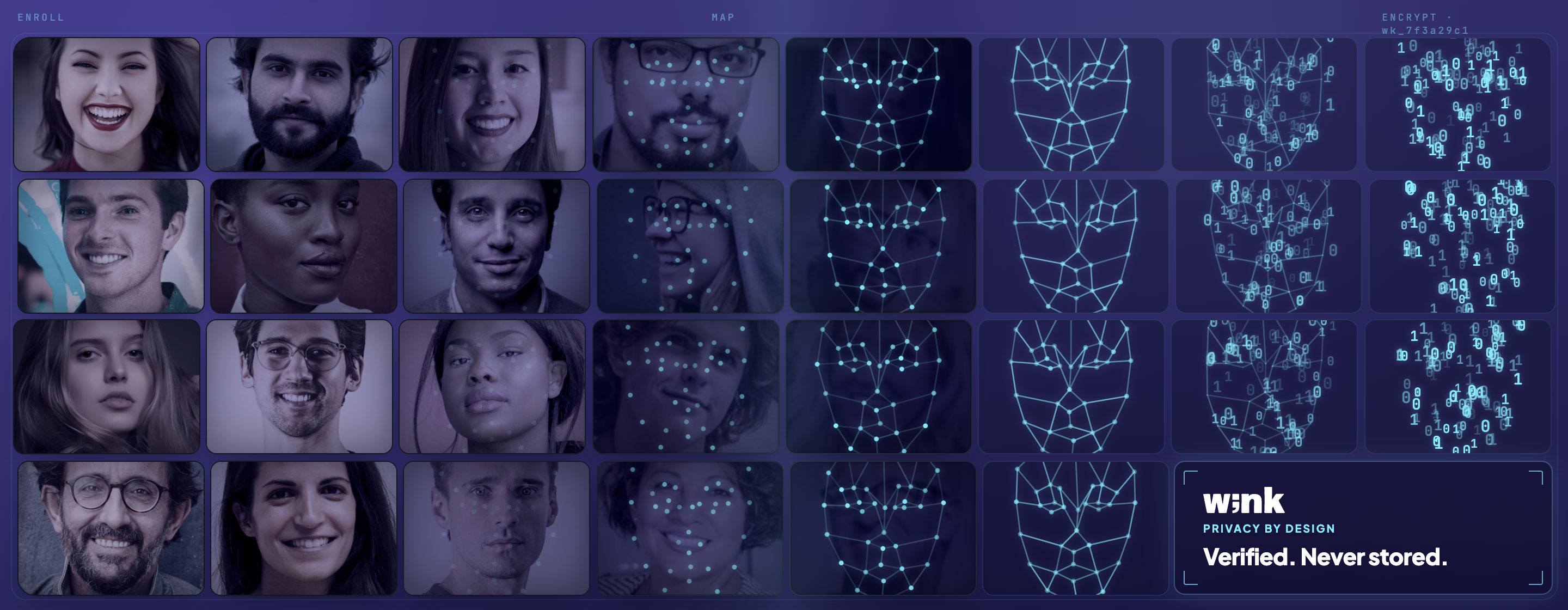
"You cannot expose a photo that was never taken. You cannot leak an image that was never stored. That principle shaped every architectural decision we made at Wink."
THE QUESTION WE ASKED FIRST
ON-DEVICE VS. CLOUD
On-device biometrics have one genuine privacy appeal: the raw signal never transmits. We respect that instinct. But Wink's answer is: we transmit and store only an encrypted vector, never the image — so the exposure risk is categorically different, not just incrementally lower. And in exchange, cloud-based processing unlocks capabilities that on-device simply cannot match.
The privacy protection isn't in where the processing happens. It's in what you choose to store afterward. Wink made that choice clearly: encrypted vectors, never images. The cloud gives us the reach, the intelligence, and the resilience to build identity infrastructure that actually scales.
WHY THIS MATTERS BEYOND COMPLIANCE
The companies that treat privacy as a compliance burden will always be one breach away from an apology blog post. The companies that treat privacy as a design principle build something more durable: genuine trust.
Trust isn't soft. It converts. It retains. It becomes a moat. When your customers know — not just believe, but structurally understand — that even if something went wrong, there is no photo of them to expose, they engage differently. They advocate for you. They stay.
"The real competition isn't about technology. It's about trust. Whoever earns that trust wins the future of commerce."
We're seeing this in practice — in merchants who choose Wink not just for fraud reduction and frictionless checkout, but because they want to offer their customers a biometric experience they can genuinely stand behind. Identity-powered commerce built on a trust layer, not a photo archive.
WHAT THE DISCORD STORY REVEALS
One more thing from this week's news deserves attention: the breach didn't originate inside Discord. It came from a third-party vendor. You can do everything right internally and still inherit catastrophic risk from a partner holding raw data on your behalf. The industry keeps learning this lesson — and keeps being surprised by it.
The answer isn't only to find better vendors. It's to minimize how much sensitive raw data flows to any vendor at all. The less your partners hold in identifiable form, the less they can lose. That principle guided how we built Wink's entire partner model.
The platforms that will earn the next decade of user trust are building with this in mind from day one. Not retrofitting privacy after a breach. Not issuing statements. Not delaying a rollout. Building it in — before the first line of code.
We did. And we're just getting started.